Business License
Creep Behavior in Marine Rope Systems: Why Long-Term Stability Matters More Than Ultimate Strength
Creep Behavior in Marine Rope Systems: Why Long-Term Stability Matters More Than Ultimate Strength
In marine and deep-sea aquaculture environments, rope systems are exposed to a combination of continuous static load, saltwater immersion, biofouling, UV radiation, and cyclic mechanical stress. While ultimate tensile strength is often the primary selection criterion, long-term performance degradation—particularly creep behavior—is what ultimately determines service life and operational safety.
What is creep in marine rope applications?
Creep refers to the time-dependent permanent deformation of a material under sustained load. In offshore mooring lines, fishing nets, and aquaculture cage systems, creep does not occur suddenly. Instead, it develops gradually over weeks, months, or even years.
The consequences are often underestimated:
· Progressive elongation of rope systems
· Loss of structural geometry in net cages
· Increased load redistribution and stress concentration
· Reduced system stability under dynamic ocean conditions
· Higher maintenance frequency and premature replacement cycles
In deep-sea farming operations, even small dimensional changes can lead to net deformation, fish escape risk, and structural imbalance of the entire cage system.
Why conventional fibers struggle?
Common marine rope materials such as Nylon and Polyester show measurable creep under sustained seawater loading conditions. UHMWPE, while highly strong, can still exhibit creep under long-duration static stress, especially in warm or continuously loaded environments.
In real offshore conditions, the challenge is not short-term breaking load—it is:
“How much of the original structure remains unchanged after 6, 12, or 24 months of continuous operation?”
LCP fiber: a different mechanical stability profile
Liquid Crystal Polymer (LCP) fiber introduces a fundamentally different behavior under long-term loading conditions.
Key characteristics relevant to marine rope systems include:
· Extremely low creep deformation under sustained load
· Ultra-low moisture absorption → minimal hydrolysis sensitivity
· High dimensional stability in seawater environments
· Excellent resistance to long-term mechanical relaxation
· Stable performance under combined stress: load + saltwater + temperature variation
Unlike conventional polymers that gradually “relax” under stress, LCP fiber maintains a much more stable molecular orientation, significantly reducing irreversible elongation over time.
Why this matters in deep-sea aquaculture?
In offshore aquaculture systems, structural integrity is not only about strength—it is about geometry preservation.
Creep directly impacts:
· Net shape retention over farming cycles
· Depth control stability
· Load balance across mooring points
· Long-term operational predictability
Reducing creep means fewer adjustments, fewer replacements, and more stable production conditions.
Engineering shift: from “strength-based design” to “stability-based design”
The marine industry is gradually moving from traditional safety-factor design toward lifetime stability engineering.
In this context, materials like LCP fiber are increasingly considered for:
· Deep-sea aquaculture net systems
· High-performance mooring ropes
· Offshore structural reinforcement lines
· Long-life subsea tension components
Final thought
In marine environments, failure is rarely sudden. It is usually the result of slow, invisible deformation over time.
Understanding and controlling creep behavior is becoming a key factor in next-generation marine engineering.
And for applications where long-term dimensional stability is critical, material selection is no longer just about “how strong” — but about how unchanged it remains under constant ocean load.
#MarineEngineering #Aquaculture #OffshoreEngineering #RopeSystems #MaterialScience #PolymerEngineering #DeepSeaFarming #LCPFiber #AdvancedMaterials
Recently Posted
-
Guangdong Polystar’s TLCP® Fiber Wins 2026 Outstanding Quality Award
August 21, 2026Guangdong Polystar’s TLCP® Fiber Wins 2026 Outstanding Quality AwardRecently, the 2026 Aramid Industry Selection result was releas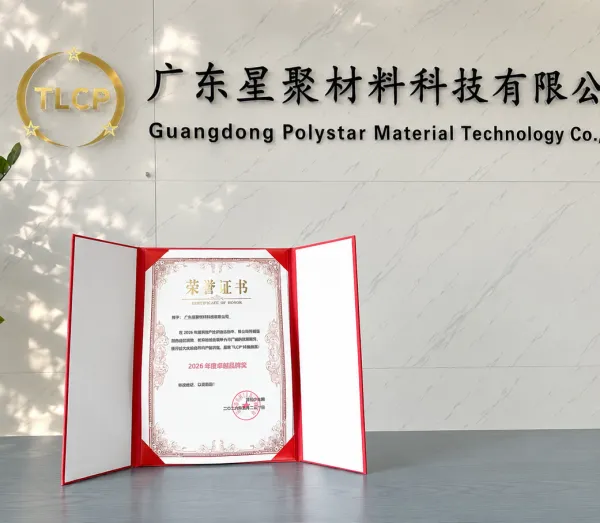 Read More
 -
Guangdong Polystar Materials has been officially enlisted in Guangdong's 2025 Batch IV Sci-Tech SME
August 21, 2026Another milestone checked off.Guangdong Polystar Materials has been officially enlisted in Guangdong's 2025 Batch IV Sci-Tech Read More
 -
Guangdong Polyster Materials Named to Dongguan's 2025 Provincial SRDI SME List
August 21, 2026Guangdong Polyster Materials Named to Dongguan's 2025 Provincial SRDI SME ListDONGGUAN, China – 🎉 Milestone moment for us.July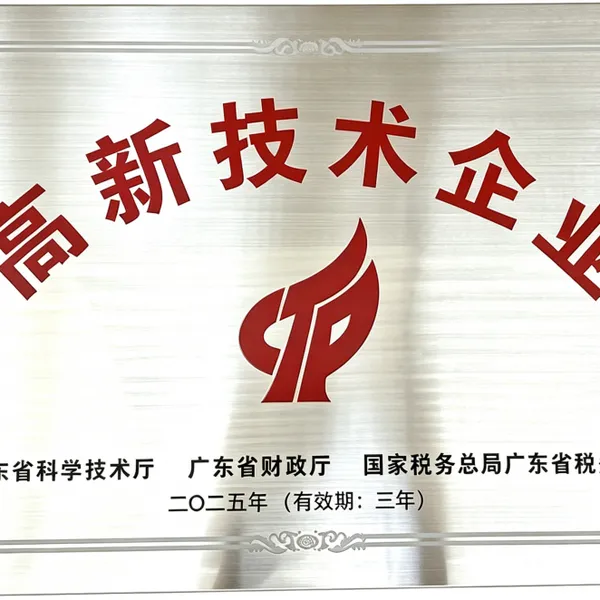 Read More
 -
Dimensional Stability in Load-Bearing Systems: Why Rope Length Changes Over Time ?
August 21, 2026Dimensional Stability in Load-Bearing Systems: Why Rope Length Changes Over Time ?A rope does not need to break to become unsuitab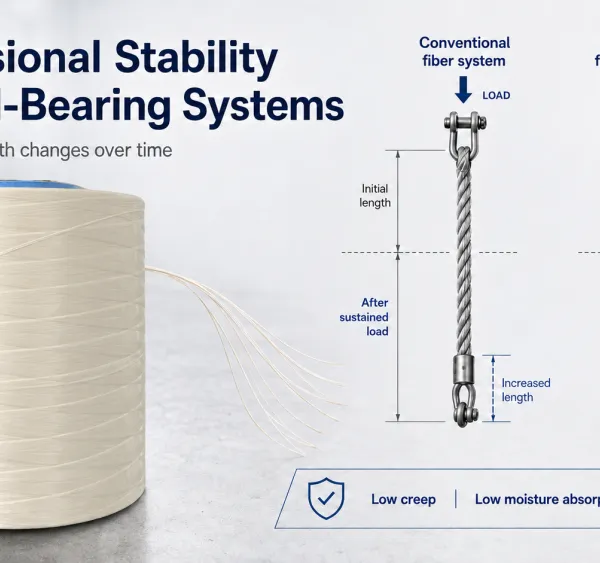 Read More

Contact Us

Recommended Products
-
 Low Elongation LCP Fiber Yarn for Dimensionally Stable Rope and WebbingUS$ 21 - 82MOQ: 100 Kilograms
 -
High Modulus LCP Fiber Yarn for Low-Elongation Structural ReinforcementNegotiableMOQ: 1 Kilogram
-
High Tensile Strength LCP Fiber Yarn for Industrial ReinforcementNegotiableMOQ: 1 Kilogram
-
Liquid Crystal Polymer Fiber Exporter for High-Performance ReinforcementNegotiableMOQ: 1 Kilogram
-
TLCP Fiber Yarn Producer for Industrial Rope and Technical WebbingNegotiableMOQ: 1 Kilogram

-
LCP Fiber Yarn Factory for Cable Strength Member ReinforcementNegotiableMOQ: 1 Kilogram
-
High Tenacity LCP Yarn Manufacturer for Marine Rope and NettingUS$ 21 - 82MOQ: 100 Kilograms
-
Low Fuzz LCP Fiber Yarn With Consistent Linear Density High PerformanceNegotiableMOQ: 1 Kilogram
-
Thermally Stable LCP Fiber Yarn With Low Thermal ShrinkageNegotiableMOQ: 1 Kilogram
-
Abrasion Resistant LCP Multifilament Yarn for Technical TextilesNegotiableMOQ: 1 Kilogram
-
Chemical Resistant LCP Fiber Yarn for Extreme Environment ApplicationsNegotiableMOQ: 1 Kilogram
-
High-Stiffness LCP Fiber Yarn for Lightweight Structural ReinforcementNegotiableMOQ: 1 Kilogram
-
TLCP Fiber Yarn With High Tensile Strength and Long-Term DurabilityNegotiableMOQ: 1 Kilogram
-
Liquid Crystal Polymer Fiber Yarn With Outstanding Dimensional StabilityNegotiableMOQ: 1 Kilogram
-
High Performance LCP Multifilament Yarn With Ultra-Low Moisture AbsorptionNegotiableMOQ: 1 Kilogram
-
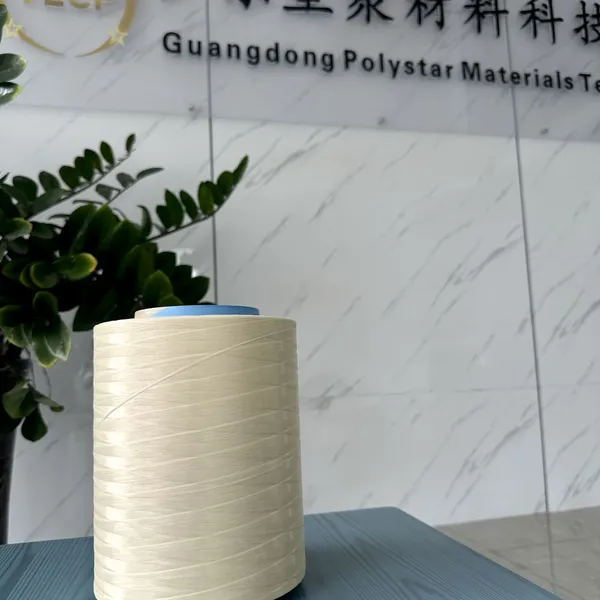
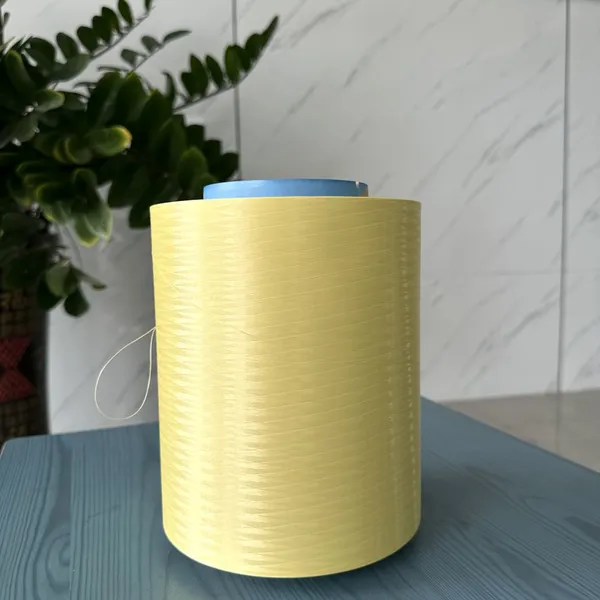
High-Performance LCP Fiber Yarn With Excellent Creep ResistanceNegotiableMOQ: 1 Kilogram
-
High Tenacity LCP Fiber Yarn With High Modulus and Low ElongationNegotiableMOQ: 1 Kilogram
-
Moisture-Resistant Dielectric LCP Fiber for 5G Cable ReinforcementNegotiableMOQ: 1 Kilogram
-
LCP Fiber Yarn With Stable Dielectric Properties for RF Cable SystemsNegotiableMOQ: 1 Kilogram
-
Low Signal Loss LCP Fiber Yarn for High-Frequency Wire Harness BraidNegotiableMOQ: 1 Kilogram