Business License
Why LCP Fiber Outperforms Nylon in Marine Applications?
Why LCP Fiber Outperforms Nylon in Marine Applications?
A New Generation of High-Performance Fiber for Marine Rope, Aquaculture Nets and Offshore Engineering
Marine environments are among the most demanding conditions for fiber-based materials.
Continuous seawater exposure, long-term tensile loading, temperature fluctuations, UV radiation and biological fouling create significant challenges for traditional fiber materials used in marine ropes, aquaculture nets, mooring systems and offshore structures.
For decades, Nylon (Polyamide) fiber has been widely used in marine applications due to its good toughness, abrasion resistance and cost efficiency.
However, as marine engineering moves toward deeper water, larger aquaculture systems and longer service-life requirements, engineers are increasingly looking for advanced fiber solutions with:
Higher long-term load stability
Lower creep deformation
Better dimensional stability
Reduced moisture sensitivity
Longer service life in seawater environments
This is where Liquid Crystal Polymer (LCP) fiber provides a significant performance advantage.
1. LCP Fiber vs Nylon: Different Material Structures, Different Marine Performance
The fundamental difference between LCP fiber and Nylon comes from their molecular structures.
Nylon is a polyamide fiber containing polar amide groups that can interact with water molecules. This provides Nylon with excellent toughness and flexibility, but also results in higher moisture absorption.
LCP fiber is based on highly oriented aromatic polymer chains with liquid crystal characteristics. During fiber spinning, the molecular chains naturally align along the fiber direction, creating:
High tensile strength
High modulus
Excellent dimensional stability
Extremely low moisture absorption
For marine applications, where fibers must maintain performance under continuous water exposure, molecular stability becomes a critical factor.
2. Extremely Low Moisture Absorption for Long-Term Marine Stability
Water absorption is one of the most important factors affecting fiber performance in marine environments.
Nylon fibers are hygroscopic materials. Moisture absorption can cause:
Reduced modulus
Dimensional changes
Strength variation
Increased creep under continuous load
Studies on Nylon fibers have shown that water exposure can significantly influence long-term mechanical behavior and creep performance, which must be considered in marine applications.
In contrast, LCP fiber has extremely low moisture absorption, typically below 0.1%, allowing it to maintain stable mechanical properties even in high humidity and seawater environments.
Engineering Advantage:
| Property | LCP Fiber | Nylon Fiber |
|---|---|---|
| Moisture absorption | Extremely low | Higher |
| Dimensional stability | Excellent | Moisture dependent |
| Performance underwater | Highly stable | Requires consideration |
| Long-term reliability | Excellent | Environment sensitive |
For applications such as:
Offshore mooring ropes
Aquaculture cage nets
Subsea reinforcement
Marine lifting systems
low moisture sensitivity directly translates into predictable service performance.
3. Superior Creep Resistance Under Continuous Marine Loading
Creep deformation is one of the biggest challenges for marine fiber systems.
Unlike short-term tensile testing, marine structures experience:
Constant tension
Wave-induced cyclic loading
Long-term suspended loads
Temperature variation
Examples include:
Fish cage nets under continuous water pressure
Mooring lines holding floating structures
Offshore lifting systems
Even small amounts of fiber elongation over years can affect system geometry and safety.
LCP fiber demonstrates excellent resistance to creep deformation because of:
Highly oriented molecular chains
Strong aromatic backbone structure
High modulus characteristics
This allows LCP fiber to maintain:
Stable length
Consistent tension
Reduced maintenance requirements
Compared with traditional Nylon fiber systems, LCP provides a stronger solution where long-term dimensional stability is critical.
4. High Strength-to-Weight Ratio for Lightweight Marine Structures
Weight reduction is becoming increasingly important in marine engineering.
Reducing fiber weight can improve:
Installation efficiency
Transportation cost
Operational flexibility
Energy consumption
LCP fiber combines:
High tensile strength
High modulus
Low density
making it suitable for lightweight reinforcement applications.
Potential applications include:
Aquaculture Industry
Predator protection nets
Cage reinforcement systems
High-strength netting structures
Offshore Engineering
Mooring components
Tension elements
Subsea reinforcement
Marine Equipment
Lifting slings
Fishing lines
Specialized ropes
5. Excellent Chemical and Environmental Resistance
Marine materials face continuous exposure to:
Saltwater
Chemicals
Oils
Biological environments
LCP fiber offers excellent resistance to many aggressive environments due to its stable aromatic polymer structure.
Advantages include:
✔ Low water sensitivity
✔ Good chemical resistance
✔ Stable mechanical properties
✔ Long-term environmental durability
For engineers designing long-life marine systems, material stability often becomes more important than initial material cost.
6. LCP Fiber Enables Next-Generation Aquaculture and Offshore Applications
The aquaculture industry is moving toward:
Larger offshore cages
Deeper water farming
Longer maintenance cycles
Higher reliability requirements
Traditional materials may meet current requirements, but future offshore systems require materials that can withstand more demanding operating conditions.
LCP fiber provides new possibilities for:
Deep-Sea Aquaculture Nets
Benefits:
Reduced deformation
Improved tension stability
Longer replacement cycles
Floating Offshore Wind Systems
Potential uses:
Lightweight reinforcement
High-strength tension components
Structural protection systems
Marine Composite Structures
Applications:
Reinforcement fabrics
Hybrid ropes
Advanced protective systems
7. LCP Fiber vs Nylon: When Should Engineers Consider LCP?
Nylon remains a cost-effective solution for many conventional marine applications.
However, engineers should consider LCP fiber when the project requires:
✓ Long service life
✓ Minimal creep deformation
✓ Stable performance underwater
✓ Reduced maintenance frequency
✓ Lightweight high-strength structures
✓ Extreme environmental reliability
Conclusion: LCP Fiber Provides a New Material Option for Future Marine Engineering
Marine applications are becoming more challenging.
Higher loads, deeper water operations and longer service expectations require fiber materials that can maintain performance over years, not only during initial testing.
Compared with Nylon fiber, LCP fiber offers significant advantages in moisture resistance, creep performance, dimensional stability and long-term reliability.
For advanced marine applications such as:
Aquaculture cage nets
Offshore ropes
Mooring systems
Marine composites
High-performance lifting structures
LCP fiber represents a next-generation high-performance fiber solution engineered for demanding environments.
Recently Posted
-
Guangdong Polystar’s TLCP® Fiber Wins 2026 Outstanding Quality Award
August 21, 2026Guangdong Polystar’s TLCP® Fiber Wins 2026 Outstanding Quality AwardRecently, the 2026 Aramid Industry Selection result was releas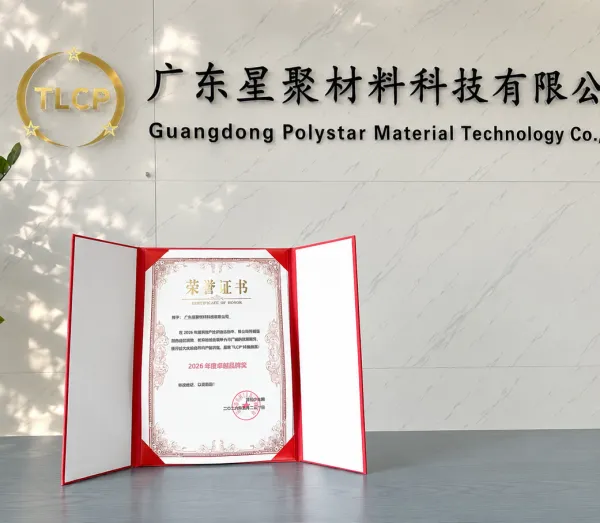 Read More
 -
Guangdong Polystar Materials has been officially enlisted in Guangdong's 2025 Batch IV Sci-Tech SME
August 21, 2026Another milestone checked off.Guangdong Polystar Materials has been officially enlisted in Guangdong's 2025 Batch IV Sci-Tech Read More
 -
Guangdong Polyster Materials Named to Dongguan's 2025 Provincial SRDI SME List
August 21, 2026Guangdong Polyster Materials Named to Dongguan's 2025 Provincial SRDI SME ListDONGGUAN, China – 🎉 Milestone moment for us.July Read More
 -
Dimensional Stability in Load-Bearing Systems: Why Rope Length Changes Over Time ?
August 21, 2026Dimensional Stability in Load-Bearing Systems: Why Rope Length Changes Over Time ?A rope does not need to break to become unsuitab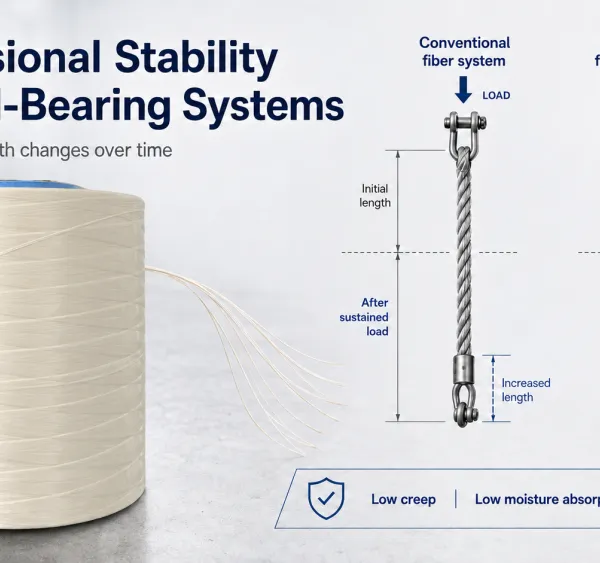 Read More

Contact Us

Recommended Products
-
 Low Elongation LCP Fiber Yarn for Dimensionally Stable Rope and WebbingUS$ 21 - 82MOQ: 100 Kilograms
 -
High Modulus LCP Fiber Yarn for Low-Elongation Structural ReinforcementNegotiableMOQ: 1 Kilogram
-
High Tensile Strength LCP Fiber Yarn for Industrial ReinforcementNegotiableMOQ: 1 Kilogram
-
Liquid Crystal Polymer Fiber Exporter for High-Performance ReinforcementNegotiableMOQ: 1 Kilogram
-
TLCP Fiber Yarn Producer for Industrial Rope and Technical WebbingNegotiableMOQ: 1 Kilogram

-
LCP Fiber Yarn Factory for Cable Strength Member ReinforcementNegotiableMOQ: 1 Kilogram
-
High Tenacity LCP Yarn Manufacturer for Marine Rope and NettingUS$ 21 - 82MOQ: 100 Kilograms
-
Low Fuzz LCP Fiber Yarn With Consistent Linear Density High PerformanceNegotiableMOQ: 1 Kilogram
-
Thermally Stable LCP Fiber Yarn With Low Thermal ShrinkageNegotiableMOQ: 1 Kilogram
-
Abrasion Resistant LCP Multifilament Yarn for Technical TextilesNegotiableMOQ: 1 Kilogram
-
Chemical Resistant LCP Fiber Yarn for Extreme Environment ApplicationsNegotiableMOQ: 1 Kilogram
-
High-Stiffness LCP Fiber Yarn for Lightweight Structural ReinforcementNegotiableMOQ: 1 Kilogram
-
TLCP Fiber Yarn With High Tensile Strength and Long-Term DurabilityNegotiableMOQ: 1 Kilogram
-
Liquid Crystal Polymer Fiber Yarn With Outstanding Dimensional StabilityNegotiableMOQ: 1 Kilogram
-
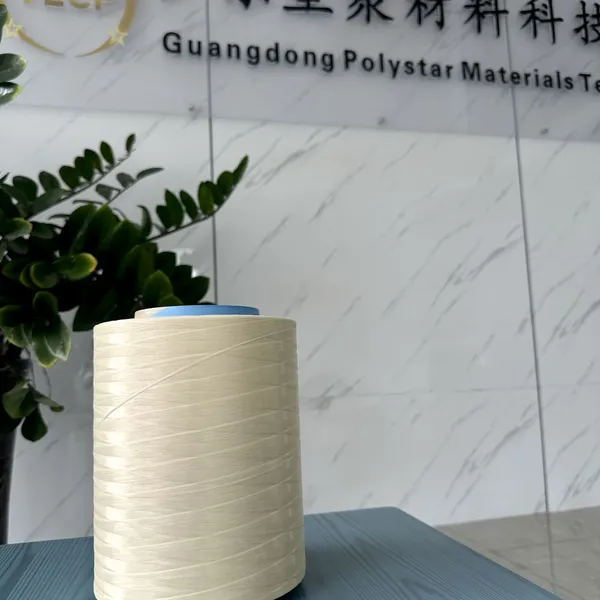
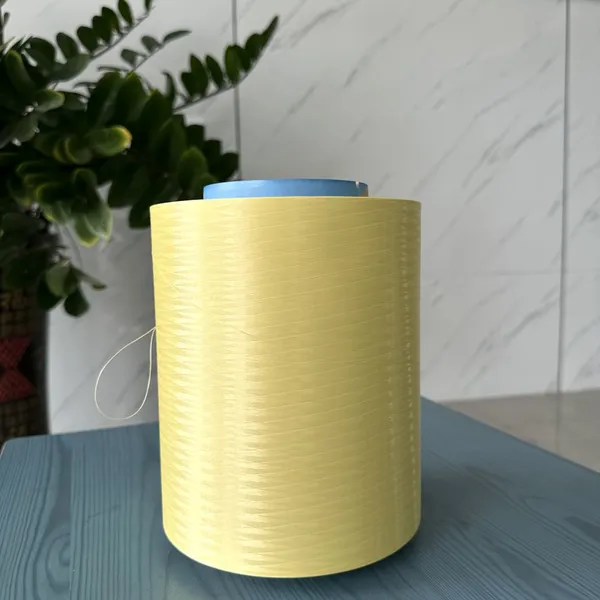
High Performance LCP Multifilament Yarn With Ultra-Low Moisture AbsorptionNegotiableMOQ: 1 Kilogram
-
High-Performance LCP Fiber Yarn With Excellent Creep ResistanceNegotiableMOQ: 1 Kilogram
-
High Tenacity LCP Fiber Yarn With High Modulus and Low ElongationNegotiableMOQ: 1 Kilogram
-
Moisture-Resistant Dielectric LCP Fiber for 5G Cable ReinforcementNegotiableMOQ: 1 Kilogram
-
LCP Fiber Yarn With Stable Dielectric Properties for RF Cable SystemsNegotiableMOQ: 1 Kilogram
-
Low Signal Loss LCP Fiber Yarn for High-Frequency Wire Harness BraidNegotiableMOQ: 1 Kilogram