Business License
LCP Fiber vs Aramid Fiber: Which Material Performs Better Under Long-Term Static Loads?
LCP Fiber vs Aramid Fiber: Which Material Performs Better Under Long-Term Static Loads?
When engineers select a high-performance reinforcement fiber, tensile strength is often the first parameter considered. However, for many industrial applications, long-term dimensional stability under sustained load is far more critical than peak tensile strength.
In offshore mooring systems, aquaculture cages, lifting slings, reinforcement yarns, and industrial ropes, materials remain under continuous tension for months or even years. Under these conditions, resistance to creep, moisture, and environmental aging often determines the service life of the final product rather than ultimate breaking strength.
Both Liquid Crystal Polymer (LCP) fiber and aramid fiber belong to the family of high-performance engineering fibers. Each offers excellent strength-to-weight performance, yet their long-term behavior differs significantly depending on the operating environment.
This article compares these two materials from an engineering perspective to help designers select the most suitable reinforcement fiber for demanding industrial applications.
Why Long-Term Load Performance Matters
Many industrial systems are designed to operate under constant or cyclic tensile loads rather than short-term peak loads.
Typical examples include:
Offshore mooring ropes
Aquaculture predator nets
Deep-sea lifting systems
Industrial lifting slings
Reinforcement yarns
Structural braided ropes
Composite reinforcement
In these applications, gradual elongation caused by creep can lead to:
Reduced dimensional accuracy
Loss of structural tension
Increased maintenance frequency
Premature replacement
Higher lifetime operating costs
Therefore, evaluating a fiber's long-term stability is just as important as comparing tensile strength.
Engineering Performance Comparison
| Property | LCP Fiber | Aramid Fiber |
|---|---|---|
| Tensile Strength | High | High |
| Specific Modulus | High | Very High |
| Moisture Absorption | Very Low | Moderate |
| Creep Resistance | Excellent | Moderate |
| Dimensional Stability | Excellent | Good |
| Chemical Resistance | Excellent | Good |
| Seawater Resistance | Excellent | Moderate |
| Abrasion Resistance | Excellent | Moderate |
| UV Stability | Good | Good |
| Long-Term Static Load Performance | Excellent | Good |
While both fibers exhibit outstanding mechanical strength, their performance begins to diverge under prolonged loading and exposure to moisture or marine environments. Published studies on aramid fibers have shown time-dependent creep behavior under sustained loading and changes in long-term mechanical response in seawater environments, highlighting the importance of considering service conditions during material selection.
1. Tensile Strength: Similar Starting Point
Both LCP fiber and aramid fiber offer high tensile strength suitable for demanding industrial applications.
For applications involving short-duration loading, either material can provide excellent performance.
However, tensile strength alone does not determine long-term structural reliability.
Engineers should also evaluate:
creep behavior
environmental stability
fatigue resistance
dimensional retention
moisture sensitivity
2. Moisture Absorption
One of the biggest differences between these materials is their interaction with moisture.
LCP Fiber
Because of its highly ordered molecular structure, LCP fiber exhibits extremely low moisture absorption.
This allows the fiber to maintain:
stable dimensions
consistent mechanical properties
predictable long-term performance
even in humid or submerged environments.
Aramid Fiber
Aramid fibers absorb more moisture than LCP fibers.
Although they retain excellent strength, absorbed moisture may influence long-term dimensional stability and mechanical response under continuous loading, particularly in marine or high-humidity service conditions.
3. Creep Resistance: One of LCP Fiber's Strongest Advantages
For applications subjected to continuous tensile loads, creep resistance is often the decisive factor.
Creep refers to the gradual permanent elongation of a material while it remains under constant stress.
Examples include:
permanent mooring systems
aquaculture cages
suspended lifting systems
structural reinforcement ropes
LCP fiber is recognized for its excellent creep resistance, helping maintain rope length, structural tension, and dimensional accuracy over extended service periods. Aramid fibers also perform well, but exhibit measurable time-dependent creep under sustained loading, especially when environmental factors are introduced.
4. Marine Durability
Marine engineering presents one of the harshest operating environments.
Materials must resist:
seawater
salt spray
humidity
UV exposure
cyclic loading
biological fouling
LCP fiber combines:
very low water uptake
excellent chemical resistance
high dimensional stability
making it particularly attractive for long-term marine structures.
Research on commercial aramid fibers has shown that seawater aging behavior varies by fiber grade, with some products maintaining performance while others exhibit progressive reductions in rupture properties under accelerated hydrolytic exposure.
5. Dimensional Stability
Many engineered systems require precise geometry throughout their service life.
Examples include:
precision braided structures
reinforcement yarns
cable strength members
industrial woven fabrics
LCP fiber exhibits exceptionally stable dimensions due to its liquid crystal molecular orientation, helping minimize permanent elongation and maintain structural integrity over time.
Typical Application Recommendations
Offshore Mooring Ropes
Recommended Material:
LCP Fiber
Reason:
Low creep
Stable rope length
Excellent seawater resistance
Aquaculture Predator Nets
Recommended Material:
LCP Fiber
Reason:
High dimensional stability
Excellent fatigue resistance
Reduced maintenance
Heavy Lifting Slings
Recommended Material:
LCP Fiber or Aramid
Selection depends on:
operating temperature
service duration
allowable elongation
environmental exposure
Reinforcement Yarns
Recommended Material:
LCP Fiber
Especially where long-term dimensional accuracy and stable reinforcement performance are critical.
Which Material Should Engineers Choose?
Neither material is universally superior.
Instead, the optimal choice depends on the application's performance priorities.
Choose aramid fiber when:
very high stiffness is required
elevated temperature capability is the primary concern
moisture exposure is limited
Choose LCP fiber when:
long-term static loading is expected
creep must be minimized
dimensional stability is critical
marine durability is required
low moisture absorption is important
Final Thoughts
As industrial systems continue to demand lighter, stronger, and more durable reinforcement materials, engineers are placing greater emphasis on long-term performance rather than peak strength alone.
For applications such as offshore ropes, aquaculture systems, lifting slings, and reinforcement yarns, selecting a material with excellent creep resistance, dimensional stability, and environmental durability can significantly improve service life while reducing maintenance costs.
Rather than viewing LCP fiber and aramid fiber as direct competitors, they should be regarded as complementary engineering materials—each optimized for different loading conditions and operating environments.
Recently Posted
-
Guangdong Polystar’s TLCP® Fiber Wins 2026 Outstanding Quality Award
August 21, 2026Guangdong Polystar’s TLCP® Fiber Wins 2026 Outstanding Quality AwardRecently, the 2026 Aramid Industry Selection result was releas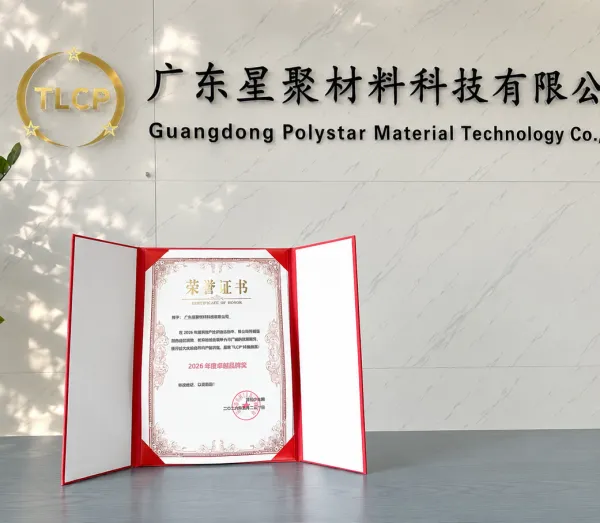 Read More
 -
Guangdong Polystar Materials has been officially enlisted in Guangdong's 2025 Batch IV Sci-Tech SME
August 21, 2026Another milestone checked off.Guangdong Polystar Materials has been officially enlisted in Guangdong's 2025 Batch IV Sci-Tech Read More
 -
Guangdong Polyster Materials Named to Dongguan's 2025 Provincial SRDI SME List
August 21, 2026Guangdong Polyster Materials Named to Dongguan's 2025 Provincial SRDI SME ListDONGGUAN, China – 🎉 Milestone moment for us.July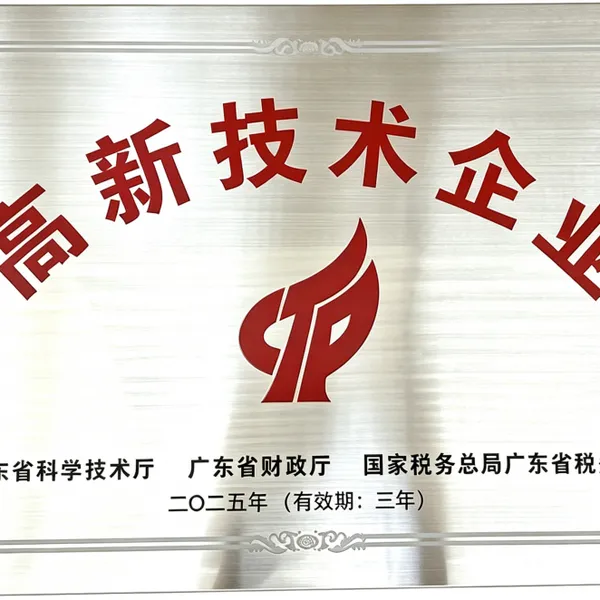 Read More
 -
Dimensional Stability in Load-Bearing Systems: Why Rope Length Changes Over Time ?
August 21, 2026Dimensional Stability in Load-Bearing Systems: Why Rope Length Changes Over Time ?A rope does not need to break to become unsuitab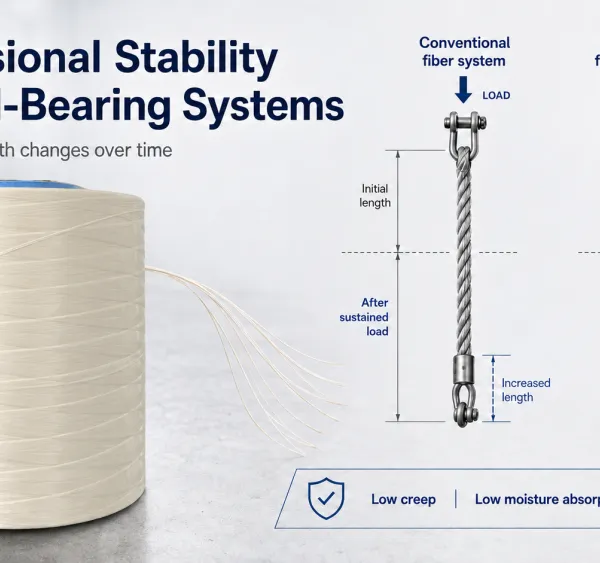 Read More

Contact Us

Recommended Products
-
 Low Elongation LCP Fiber Yarn for Dimensionally Stable Rope and WebbingUS$ 21 - 82MOQ: 100 Kilograms
 -
High Modulus LCP Fiber Yarn for Low-Elongation Structural ReinforcementNegotiableMOQ: 1 Kilogram
-
High Tensile Strength LCP Fiber Yarn for Industrial ReinforcementNegotiableMOQ: 1 Kilogram
-
Liquid Crystal Polymer Fiber Exporter for High-Performance ReinforcementNegotiableMOQ: 1 Kilogram
-
TLCP Fiber Yarn Producer for Industrial Rope and Technical WebbingNegotiableMOQ: 1 Kilogram

-
LCP Fiber Yarn Factory for Cable Strength Member ReinforcementNegotiableMOQ: 1 Kilogram
-
High Tenacity LCP Yarn Manufacturer for Marine Rope and NettingUS$ 21 - 82MOQ: 100 Kilograms
-
Low Fuzz LCP Fiber Yarn With Consistent Linear Density High PerformanceNegotiableMOQ: 1 Kilogram
-
Thermally Stable LCP Fiber Yarn With Low Thermal ShrinkageNegotiableMOQ: 1 Kilogram
-
Abrasion Resistant LCP Multifilament Yarn for Technical TextilesNegotiableMOQ: 1 Kilogram
-
Chemical Resistant LCP Fiber Yarn for Extreme Environment ApplicationsNegotiableMOQ: 1 Kilogram
-
High-Stiffness LCP Fiber Yarn for Lightweight Structural ReinforcementNegotiableMOQ: 1 Kilogram
-
TLCP Fiber Yarn With High Tensile Strength and Long-Term DurabilityNegotiableMOQ: 1 Kilogram
-
Liquid Crystal Polymer Fiber Yarn With Outstanding Dimensional StabilityNegotiableMOQ: 1 Kilogram
-
High Performance LCP Multifilament Yarn With Ultra-Low Moisture AbsorptionNegotiableMOQ: 1 Kilogram
-
High-Performance LCP Fiber Yarn With Excellent Creep ResistanceNegotiableMOQ: 1 Kilogram
-
High Tenacity LCP Fiber Yarn With High Modulus and Low ElongationNegotiableMOQ: 1 Kilogram
-
Moisture-Resistant Dielectric LCP Fiber for 5G Cable ReinforcementNegotiableMOQ: 1 Kilogram
-
LCP Fiber Yarn With Stable Dielectric Properties for RF Cable SystemsNegotiableMOQ: 1 Kilogram
-
Low Signal Loss LCP Fiber Yarn for High-Frequency Wire Harness BraidNegotiableMOQ: 1 Kilogram