Business License
LCP Fiber vs Nylon for Marine Applications | Low Creep & Seawater Resistance
Why Fiber Selection Becomes More Critical in Marine Environments
Marine structures operate under conditions that are fundamentally different from most land-based textile applications.
A rope, reinforcement yarn, aquaculture net or subsea cable may remain exposed to seawater for months or years while simultaneously experiencing:
Continuous tensile loading
Cyclic wave and current loads
Repeated wet-dry conditions
Saltwater exposure
Abrasion and flexing
Temperature changes
Long deployment periods
Strict dimensional and tension-control requirements
Under these conditions, initial tensile strength alone is not enough to determine material suitability.
For engineers designing marine ropes, offshore reinforcement systems, aquaculture nets or subsea components, the more important question is:
How much of the original mechanical performance will the fiber retain after prolonged exposure to moisture and sustained loading?
This is where the difference between conventional nylon and high-performance Liquid Crystal Polymer (LCP) fiber becomes particularly important.
Nylon in Marine Applications: Strong, Flexible — but Moisture Sensitive
Nylon, particularly polyamide fibers such as PA6 and PA66, has been widely used in ropes, nets and marine textile structures.
There are good reasons for this.
Nylon offers:
Good tensile strength
High elongation
Excellent energy absorption
Good flexibility
Established processing technology
Relatively competitive material cost
For applications requiring shock absorption and high elastic elongation, nylon can remain a valuable engineering material.
However, its polyamide molecular structure is inherently sensitive to moisture.
Water molecules interact with the polymer structure and act as a plasticizing medium. As moisture content changes, mechanical behavior can change as well.
Research on polyamide fibers for marine mooring applications has shown that water exposure must be considered when evaluating long-term mechanical and creep behavior.
For long-duration marine systems, this creates several engineering concerns.
1. Water Absorption Changes Nylon's Mechanical Behavior
One of the most significant differences between nylon and LCP fiber is moisture sensitivity.
Nylon can absorb significant amounts of moisture from humid environments and direct water exposure.
As water enters the polymer structure, it can influence:
Modulus
Elongation
Dimensional stability
Creep behavior
Load-extension characteristics
The result is not necessarily immediate failure.
The more important issue is that the mechanical behavior of the fiber may become less predictable as moisture conditions change.
For a fishing net, this may simply mean additional stretch.
For an engineered offshore structure where line geometry, preload or dimensional stability must remain tightly controlled, the consequences can be much more significant.
Why LCP Fiber Behaves Differently in Seawater
LCP fiber is produced from thermotropic liquid crystal polymer.
During fiber formation, its highly rigid molecular chains become strongly oriented along the fiber axis.
This highly ordered molecular structure contributes to several important properties:
High tensile strength
High modulus
Low elongation
Very low moisture absorption
Excellent creep resistance
High dimensional stability
Good chemical resistance
Commercial high-performance LCP fibers are specifically characterized by extremely low moisture uptake and strong dimensional stability. Published data for established LCP fiber systems also show very stable dry-to-wet tensile behavior.
These characteristics make LCP particularly interesting for marine components that must remain dimensionally stable while carrying sustained loads.
LCP Fiber vs Nylon: Marine Performance Comparison
| Engineering Property | LCP Fiber | Nylon Fiber | Marine Design Impact |
|---|---|---|---|
| Moisture absorption | Very low | Relatively high | More predictable wet-state behavior with LCP |
| Wet dimensional stability | Excellent | Moisture dependent | Better geometry and tension control |
| Creep under sustained load | Very low | More significant | LCP better suited to long-term tension |
| Elongation | Low | High | LCP for stability; nylon for shock absorption |
| Modulus | High | Lower | LCP provides greater stiffness |
| Mechanical stability in water | High | Influenced by water uptake | LCP suitable for long deployment |
| Chemical resistance | Excellent against many chemicals | Application dependent | Advantage in aggressive environments |
| Long-term dimensional change | Low | Higher | Important for ropes, nets and cable reinforcement |
| Energy absorption | Moderate | High | Nylon may be preferred where stretch is required |
The key difference can therefore be summarized simply:
Nylon is valuable when controlled elongation and energy absorption are required. LCP becomes particularly attractive when low creep, dimensional stability and long-term load retention are the priorities.
2. Low Creep Is One of LCP Fiber's Biggest Marine Advantages
For many offshore applications, creep can be more important than short-term tensile strength.
Creep is the gradual, time-dependent elongation of a material under continuous load.
Consider a line that initially measures 100 meters.
Even if it never approaches its breaking strength, sustained tension can gradually increase its length.
In an engineered system, that dimensional change may affect:
Pretension
Structural geometry
Net shape
Mooring position
Load distribution
Cable strain
Operational clearance
For this reason, creep behavior has become an important research topic for synthetic mooring ropes, including polyamide systems used in floating offshore structures. Long-duration tests on PA6 ropes have specifically investigated creep behavior in water over periods extending to years.
LCP fiber behaves differently.
Its rigid, highly oriented molecular structure strongly restricts molecular-chain movement under continuous tensile stress.
The resulting minimal creep behavior is one of the reasons LCP fiber has been adopted in demanding rope and deepwater lifting applications.
Why Does Low Creep Matter Underwater?
Imagine a deep-sea structure using a high-strength reinforcement line.
The line may initially meet every tensile requirement.
But if the reinforcement gradually elongates under continuous load:
Initial condition
Correct geometry → correct tension → correct load distribution
After prolonged creep
Increased length → reduced tension → changed geometry → redistributed structural loads
This is why an engineer should not evaluate a marine fiber based only on:
“What is the breaking strength?”
A more useful question is:
“How much deformation occurs after thousands of hours under sustained load?”
For long-life marine systems, that distinction can determine whether a material remains dimensionally stable throughout its service life.
3. Moisture Absorption and Creep Can Work Together
The marine environment creates an additional challenge because moisture and sustained load do not act independently.
In moisture-sensitive polymers such as polyamide, absorbed water can influence molecular mobility.
Therefore, engineers evaluating nylon for long-term marine systems need to consider both:
Mechanical Load + Water Exposure
rather than tensile strength alone.
Experimental research on PA6 fibers has found that while water may have a relatively limited influence on some short-duration tensile measurements, its influence on long-term mechanical response can be much more significant.
This distinction is highly relevant to marine engineering.
A laboratory tensile test lasting several minutes may show acceptable performance.
A rope exposed to seawater while carrying continuous load for several years represents a very different mechanical condition.
4. Better Dimensional Stability for Aquaculture Nets
Modern offshore aquaculture systems are becoming:
Larger
Deeper
More exposed to ocean currents
More highly loaded
More dependent on predictable structural geometry
Net deformation is therefore an important engineering concern.
Excessive elongation can change:
Cage volume
Net geometry
Predator-net clearance
Tension distribution
Hydrodynamic behavior
For reinforcement yarns or high-load sections where minimizing deformation is more important than maximizing elasticity, LCP fiber can provide an attractive alternative to conventional nylon.
Potential applications include:
Aquaculture Net Reinforcement
LCP yarn can be evaluated as reinforcement in high-load areas where dimensional stability is required.
Predator Net Systems
Low-creep reinforcement can help maintain designed spacing and tension over prolonged loading periods.
Cage Structural Reinforcement
High modulus can help reduce excessive elongation in selected structural textile components.
LCP does not necessarily need to replace every kilogram of nylon.
A more practical engineering approach may be to use LCP selectively in critical load-bearing zones where creep or dimensional change is the dominant failure concern.
5. Marine Ropes and Mooring Components
Marine ropes experience a combination of static and dynamic loading.
Applications may include:
Mooring lines
Towing ropes
Offshore handling lines
Deepwater lifting
Winch lines
Structural reinforcement cords
LCP fiber is particularly interesting where engineers require:
high strength + low elongation + minimal creep + low moisture absorption.
High-performance LCP fibers are already associated with rope, mooring and deepwater lifting applications because of their tensile properties, low moisture absorption and creep resistance.
However, material selection must still consider the complete rope design.
Fiber performance alone does not determine rope performance.
Engineers should also evaluate:
Rope construction
Twist level
Braid architecture
Termination efficiency
Bend radius
Abrasion
Flex fatigue
Cyclic loading
Surface treatment
UV exposure
Safety factor
This systems-level evaluation is especially important in offshore engineering.
6. Subsea Optical and Power Cable Reinforcement
Another promising marine application for LCP fiber is cable reinforcement.
Subsea and offshore cables may require tensile strength members that prevent excessive strain from reaching sensitive internal components.
For optical cables in particular, uncontrolled elongation can place mechanical stress on fibers and influence signal reliability.
Low-creep LCP reinforcement can therefore help limit longitudinal strain.
Typical evaluation areas include:
Subsea optical cables
Marine communication cables
Umbilicals
Sensor cables
ROV tether systems
Offshore instrumentation lines
Cable ripcords
Strength members
Commercial LCP fiber systems are already used as cable tension and strain-relief materials because minimal creep helps protect optical components from unintended strain.
7. Seawater Resistance Is More Than Corrosion Resistance
Synthetic fibers obviously do not “rust” like steel.
But seawater resistance should not simply be interpreted as corrosion resistance.
A marine fiber should be evaluated for its ability to maintain:
Tensile properties
Modulus
Dimensions
Surface integrity
Fatigue performance
Mechanical stability
after prolonged environmental exposure.
LCP's combination of low moisture absorption and chemical resistance gives it a strong foundation for marine applications.
Nevertheless, qualification testing remains essential.
Actual service life can also be influenced by:
UV radiation
Sand and particle abrasion
Fiber-to-fiber abrasion
Marine growth
Repeated bending
Knots and terminations
Coatings
Rope construction
Temperature
Continuous and cyclic load levels
Therefore, seawater resistance should always be evaluated at both fiber level and finished-product level.
When Should Engineers Consider LCP Instead of Nylon?
LCP fiber deserves serious consideration when an application has one or more of the following requirements:
Sustained Tensile Load
The structure remains under significant tension for long periods.
Tight Dimensional Tolerance
Changes in length can alter structural geometry or system performance.
Permanent or Long-Term Water Exposure
Mechanical stability must be retained under wet conditions.
Limited Retensioning
Maintenance access is difficult or expensive.
Weight Reduction
High specific mechanical performance may enable smaller or lighter reinforcement structures.
Cable Strain Control
Excessive elongation could damage optical, electrical or sensing components.
High-Performance Aquaculture Structures
Net geometry and reinforcement stability must be maintained under strong ocean currents.
When Can Nylon Still Be the Better Material?
LCP is not automatically the best fiber for every marine application.
Nylon provides an important advantage when high elongation and energy absorption are desirable.
For example, an engineered system may intentionally require rope stretch to absorb shock loading.
Nylon may also offer an economic advantage in less demanding applications.
A useful simplified selection principle is:
Choose Nylon when:
High elasticity is desirable
Shock absorption is important
Creep is acceptable
Precise dimensional control is not critical
Material cost is a major priority
Evaluate LCP when:
Low creep is critical
High modulus is required
Moisture-induced dimensional change must be minimized
Long-term tensile stability matters
Weight or rope diameter reduction is valuable
Engineering performance should always be evaluated against actual load conditions rather than selecting a fiber based on tensile strength alone.
LCP Fiber Is Especially Valuable Where Failure Is Gradual, Not Sudden
One of the most important distinctions in marine engineering is the difference between strength failure and dimensional failure.
A component does not necessarily need to break before its performance becomes unacceptable.
A rope can still be intact but become too long.
A net can still be intact but lose its designed geometry.
A cable strength member can still be intact but allow excessive strain.
A structural reinforcement can still be intact but redistribute loads to other components.
This is why creep resistance and dimensional stability are increasingly important material-selection parameters for advanced offshore systems.
LCP fiber addresses precisely this engineering challenge.
Marine Applications Where LCP Fiber Can Be Evaluated
Potential application areas include:
Offshore mooring rope reinforcement
Aquaculture cage nets
Predator protection nets
High-performance fishing lines
Deepwater lifting ropes
Marine towing ropes
Offshore lifting slings
Subsea optical cable strength members
Offshore power cable reinforcement
ROV tether reinforcement
Marine sensor cables
Structural textile reinforcement
High-load braided cords
In many cases, the most commercially and technically practical solution may be hybrid construction, using LCP only in the sections where high modulus, low creep or dimensional stability delivers the greatest value.
LCP Fiber vs Nylon: The Engineering Conclusion
The key question in marine fiber selection is not simply:
Which material has the highest initial strength?
The better question is:
Which material maintains the required geometry and mechanical performance throughout the intended service life?
Nylon remains useful where flexibility and energy absorption are required.
But for marine structures exposed to water and sustained tensile loading, LCP fiber offers a compelling combination of:
Very low moisture absorption
High tensile strength
High modulus
Minimal creep
Low elongation
Excellent dimensional stability
Good chemical resistance
These properties make LCP fiber particularly suitable for engineering applications where long-term load retention and dimensional control are more important than high stretch.
For next-generation aquaculture systems, offshore ropes, subsea cables and marine reinforcement structures, that distinction can be critical.
Frequently Asked Questions About LCP Fiber in Marine Applications
Is LCP fiber waterproof?
LCP fiber has very low moisture absorption compared with moisture-sensitive polyamide fibers such as nylon. This helps it maintain more stable dimensions and mechanical behavior in wet environments. “Waterproof,” however, should not be interpreted as immunity to every marine degradation mechanism; the finished rope, net or cable should still be qualified under actual service conditions.
Does nylon lose strength in seawater?
Water interacts with polyamide and can change its mechanical behavior. The exact effect depends on nylon type, construction, temperature, exposure time and load conditions. For long-term marine applications, moisture effects on creep and dimensional behavior are particularly important.
Why is low creep important for marine ropes?
Creep causes gradual elongation under sustained load. Even without fiber breakage, excessive creep can reduce pretension, alter geometry and redistribute loads within an offshore structure.
Is LCP fiber suitable for aquaculture nets?
LCP can be particularly useful in high-load or reinforcement sections where low elongation, high modulus and dimensional stability are required. Finished-net performance still depends on knotting, braiding, coating, abrasion, UV exposure and net construction.
Can LCP fiber replace nylon completely?
Not necessarily. Nylon provides high elongation and good shock absorption, while LCP provides greater dimensional stability and lower creep. The best material depends on the mechanical function of the component. Hybrid designs can also be effective.
What is the main advantage of LCP fiber in seawater?
For many engineering applications, the main advantage is not simply chemical resistance. It is the combination of very low moisture absorption, minimal creep and stable mechanical dimensions under prolonged loading.
Which marine applications benefit most from LCP fiber?
Applications involving sustained loads and strict dimensional control are particularly relevant, including offshore rope reinforcement, aquaculture structures, deepwater lifting systems, subsea cable strength members and high-performance marine cords.
Talk to an LCP Fiber Engineer
Marine fiber selection should be based on the complete operating environment — including working load, expected service life, rope or net construction, diameter limitations, elongation requirements, seawater exposure and cyclic loading.
If you are developing a marine rope, aquaculture net, subsea cable, offshore reinforcement system or other high-load marine textile, our technical team can work with your engineers to evaluate the appropriate LCP yarn specification for prototype and qualification testing.
Recently Posted
-
Guangdong Polystar’s TLCP® Fiber Wins 2026 Outstanding Quality Award
August 21, 2026Guangdong Polystar’s TLCP® Fiber Wins 2026 Outstanding Quality AwardRecently, the 2026 Aramid Industry Selection result was releas Read More
 -
Guangdong Polystar Materials has been officially enlisted in Guangdong's 2025 Batch IV Sci-Tech SME
August 21, 2026Another milestone checked off.Guangdong Polystar Materials has been officially enlisted in Guangdong's 2025 Batch IV Sci-Tech Read More
 -
Guangdong Polyster Materials Named to Dongguan's 2025 Provincial SRDI SME List
August 21, 2026Guangdong Polyster Materials Named to Dongguan's 2025 Provincial SRDI SME ListDONGGUAN, China – 🎉 Milestone moment for us.July Read More
 -
Dimensional Stability in Load-Bearing Systems: Why Rope Length Changes Over Time ?
August 21, 2026Dimensional Stability in Load-Bearing Systems: Why Rope Length Changes Over Time ?A rope does not need to break to become unsuitab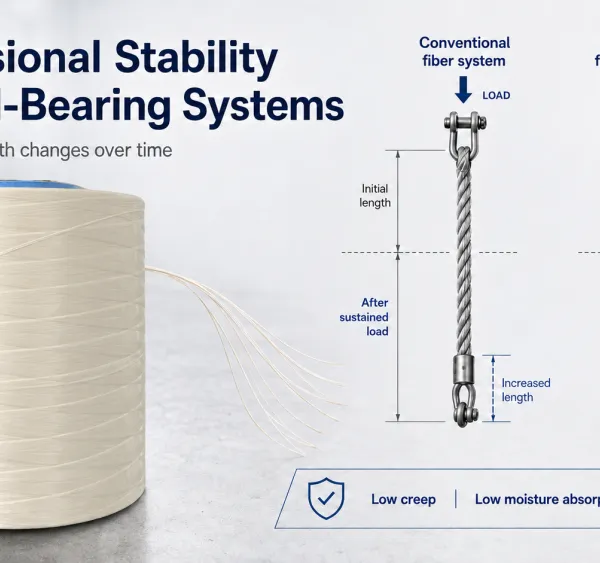 Read More

Contact Us

Recommended Products
-
 Low Elongation LCP Fiber Yarn for Dimensionally Stable Rope and WebbingUS$ 21 - 82MOQ: 100 Kilograms
 -
High Modulus LCP Fiber Yarn for Low-Elongation Structural ReinforcementNegotiableMOQ: 1 Kilogram
-
High Tensile Strength LCP Fiber Yarn for Industrial ReinforcementNegotiableMOQ: 1 Kilogram
-
Liquid Crystal Polymer Fiber Exporter for High-Performance ReinforcementNegotiableMOQ: 1 Kilogram
-
TLCP Fiber Yarn Producer for Industrial Rope and Technical WebbingNegotiableMOQ: 1 Kilogram

-
LCP Fiber Yarn Factory for Cable Strength Member ReinforcementNegotiableMOQ: 1 Kilogram
-
High Tenacity LCP Yarn Manufacturer for Marine Rope and NettingUS$ 21 - 82MOQ: 100 Kilograms
-
Low Fuzz LCP Fiber Yarn With Consistent Linear Density High PerformanceNegotiableMOQ: 1 Kilogram
-
Thermally Stable LCP Fiber Yarn With Low Thermal ShrinkageNegotiableMOQ: 1 Kilogram
-
Abrasion Resistant LCP Multifilament Yarn for Technical TextilesNegotiableMOQ: 1 Kilogram
-
Chemical Resistant LCP Fiber Yarn for Extreme Environment ApplicationsNegotiableMOQ: 1 Kilogram
-
High-Stiffness LCP Fiber Yarn for Lightweight Structural ReinforcementNegotiableMOQ: 1 Kilogram
-
TLCP Fiber Yarn With High Tensile Strength and Long-Term DurabilityNegotiableMOQ: 1 Kilogram
-
Liquid Crystal Polymer Fiber Yarn With Outstanding Dimensional StabilityNegotiableMOQ: 1 Kilogram
-
High Performance LCP Multifilament Yarn With Ultra-Low Moisture AbsorptionNegotiableMOQ: 1 Kilogram
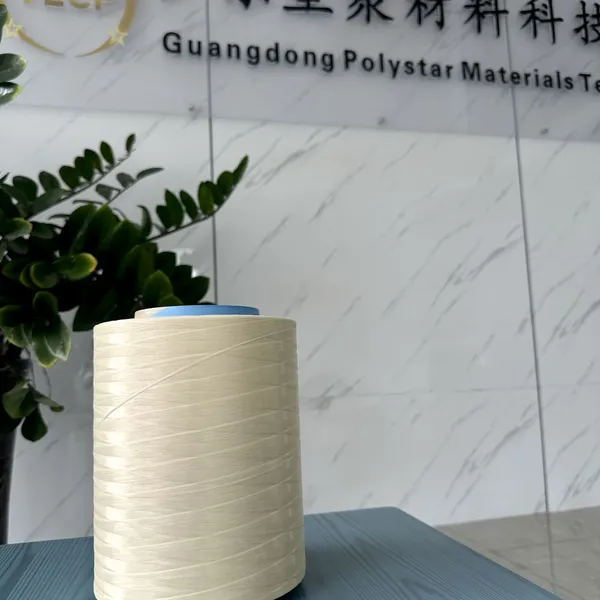
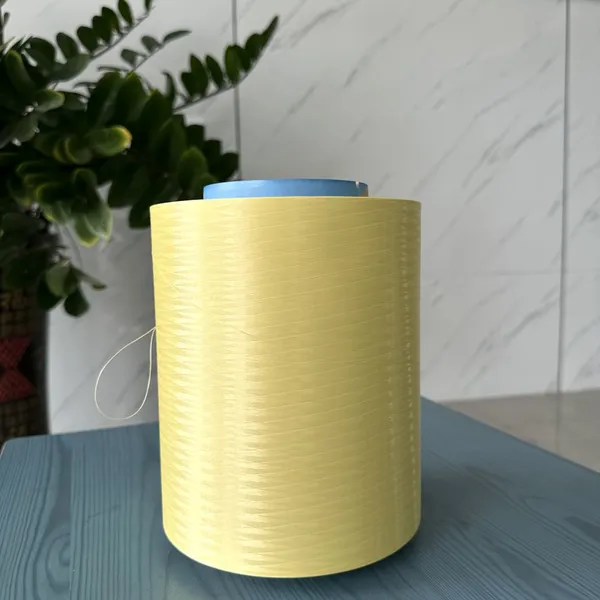
-
High-Performance LCP Fiber Yarn With Excellent Creep ResistanceNegotiableMOQ: 1 Kilogram
-
High Tenacity LCP Fiber Yarn With High Modulus and Low ElongationNegotiableMOQ: 1 Kilogram
-
Moisture-Resistant Dielectric LCP Fiber for 5G Cable ReinforcementNegotiableMOQ: 1 Kilogram
-
LCP Fiber Yarn With Stable Dielectric Properties for RF Cable SystemsNegotiableMOQ: 1 Kilogram
-
Low Signal Loss LCP Fiber Yarn for High-Frequency Wire Harness BraidNegotiableMOQ: 1 Kilogram